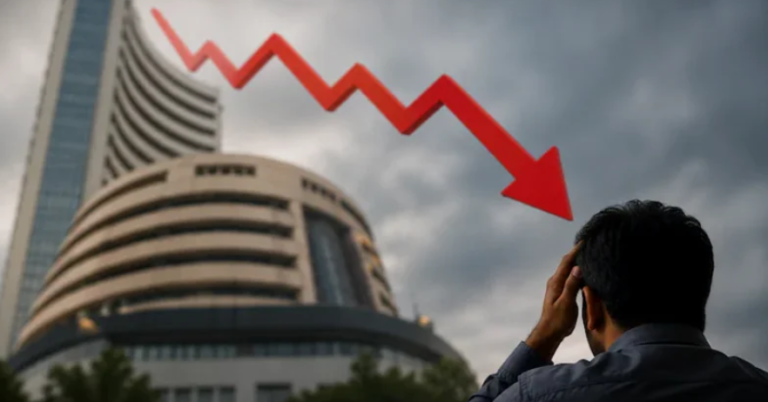

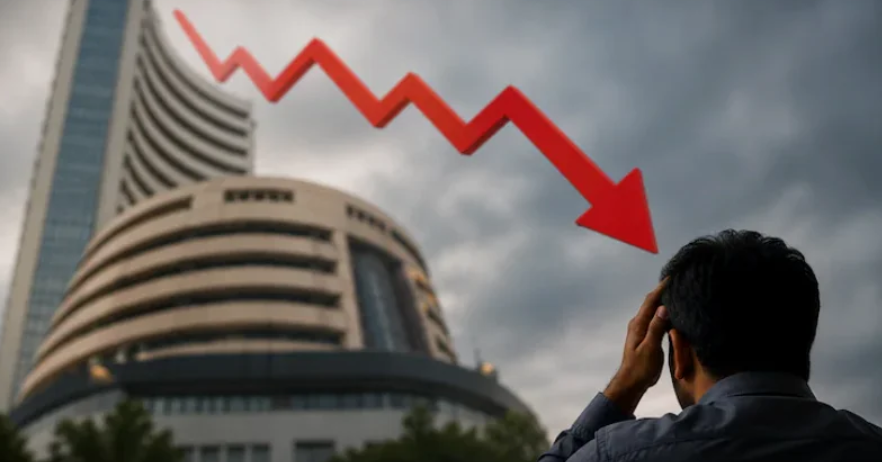
Sensex Crash Today: भारतीय शेयर बाजार में गुरुवार, 1 अक्टूबर 2026 को भारी बिकवाली देखने को मिली। शुरुआती कारोबार के बाद Sensex करीब 1,000 अंक तक टूट गया, जबकि Nifty 50 22,300 के नीचे चला गया। बाजार में गिरावट के बीच BSE-listed कंपनियों के कुल बाजार पूंजीकरण में कुछ ही घंटों में करीब ₹9 लाख करोड़ की कमी आई।
विदेशी निवेशकों की लगातार बिकवाली, अमेरिकी बॉन्ड यील्ड में बढ़ोतरी, कमजोर रुपया और कच्चे तेल की कीमतों को बाजार में दबाव के प्रमुख कारणों में गिना जा रहा है।
Sensex Today: शेयर बाजार में क्यों आई इतनी बड़ी गिरावट?
भारतीय शेयर बाजार में गुरुवार की गिरावट के पीछे कई वैश्विक और घरेलू कारण रहे। इनमें सबसे प्रमुख Foreign Institutional Investors (FIIs) की भारी बिकवाली रही।
30 सितंबर को FIIs ने भारतीय इक्विटी में करीब ₹10,148 करोड़ की शुद्ध बिकवाली की। इससे पहले भी विदेशी निवेशकों ने बड़ी मात्रा में भारतीय शेयर बेचे थे। लगातार बिकवाली ने बाजार के सेंटीमेंट पर दबाव बढ़ाया है।
1. FII Selling ने बढ़ाया दबाव
विदेशी निवेशकों की लगातार बिकवाली भारतीय शेयर बाजार के लिए सबसे बड़ी चिंताओं में से एक बनी हुई है। रिपोर्टों के अनुसार, पिछले कुछ कारोबारी सत्रों में FIIs की बिकवाली ₹20,000 करोड़ से ऊपर पहुंच गई है।
सितंबर में भी विदेशी निवेशकों की निकासी ने भारतीय बाजार पर दबाव बनाए रखा। Reuters के अनुसार, सितंबर में विदेशी निवेशकों ने भारतीय इक्विटी से लगभग $2.7 billion निकाले।
2. US Bond Yields में तेजी
अमेरिकी बॉन्ड यील्ड में बढ़ोतरी ने भी emerging markets पर दबाव बढ़ाया है। अमेरिकी 10-year Treasury yield हाल के दिनों में 5.2% से ऊपर रही है।
जब अमेरिकी बॉन्ड से मिलने वाला रिटर्न बढ़ता है, तो वैश्विक निवेशकों के लिए अमेरिकी fixed-income assets अपेक्षाकृत आकर्षक हो सकते हैं। इससे भारत जैसे emerging markets में विदेशी पूंजी के प्रवाह पर असर पड़ सकता है।
3. कमजोर हुआ भारतीय रुपया
भारतीय रुपया भी डॉलर के मुकाबले दबाव में है। 1 अक्टूबर को रुपया करीब ₹96 प्रति डॉलर के आसपास कारोबार करता देखा गया।
रुपये में कमजोरी विदेशी निवेशकों के लिए भारतीय शेयरों से मिलने वाले dollar-denominated returns को प्रभावित कर सकती है।
4. Crude Oil Prices बनी चिंता
कच्चे तेल की कीमतों में उतार-चढ़ाव भी भारतीय बाजार के लिए महत्वपूर्ण है। भारत अपनी घरेलू जरूरतों के एक बड़े हिस्से के लिए crude oil का आयात करता है।
ऊंची crude prices से भारत के import bill, inflation और कंपनियों की लागत पर दबाव बढ़ सकता है। हाल के बाजार दबाव में West Asia से जुड़ी geopolitical uncertainty और oil supply concerns भी महत्वपूर्ण रहे हैं।
5. Market Volatility में बढ़ोतरी
बाजार में तेज उतार-चढ़ाव के कारण volatility भी बढ़ी है। बुधवार को Sensex 48.78 अंक गिरकर 72,480.29 पर बंद हुआ था, जबकि Nifty 50 22,620.45 पर बंद हुआ।
Stock Market Crash: क्या हर शेयर में आई इतनी बड़ी गिरावट?
नहीं। Sensex और Nifty में गिरावट का मतलब यह नहीं है कि बाजार के हर segment में समान गिरावट हुई है।
Large-cap stocks पर benchmark indices का अधिक प्रभाव होता है, जबकि कई retail investors का exposure mid-cap और small-cap stocks में भी होता है। इसलिए किसी निवेशक के portfolio का प्रदर्शन Sensex या Nifty से अलग हो सकता है।
Sensex Crash: Domestic Investors ने दी कुछ राहत
विदेशी निवेशकों की भारी बिकवाली के बीच domestic institutional investors यानी DIIs ने खरीदारी जारी रखी।
30 सितंबर को FIIs की लगभग ₹10,148 करोड़ की बिकवाली के मुकाबले DIIs ने करीब ₹11,271 करोड़ की खरीदारी की थी। इससे घरेलू निवेशकों की भूमिका बाजार में महत्वपूर्ण बनी हुई है।
Indian Stock Market: आगे किन चीजों पर रहेगी नजर?
आने वाले कारोबारी सत्रों में निवेशक मुख्य रूप से इन factors पर नजर रख सकते हैं:
- US Treasury bond yields
- Crude oil prices
- USD/INR exchange rate
- FII और DII flows
- US-Iran और West Asia से जुड़ी geopolitical developments
- RBI की monetary policy
- Global inflation और interest-rate expectations
सितंबर 2026 में Sensex और Nifty दोनों में करीब 6% की गिरावट दर्ज हुई थी, जिससे अक्टूबर की शुरुआत में भी बाजार में volatility बनी हुई है।
Sensex Today: निवेशकों के लिए क्या मायने रखता है?
मौजूदा गिरावट कई global factors के एक साथ असर को दिखाती है। हालांकि, किसी एक कारोबारी दिन की गिरावट को पूरे बाजार की लंबी अवधि की दिशा का सीधा संकेत मानना उचित नहीं होगा।
निवेशकों को अपने portfolio, risk tolerance और investment horizon के अनुसार निर्णय लेना चाहिए और केवल short-term market movement के आधार पर जल्दबाजी में फैसला लेने से बचना चाहिए।
Sensex Crash Today: Sensex Falls 1,000 Points, ₹9 Lakh Crore Wiped Out As FII Selling Intensifies
Sensex Crash Today: Indian stock markets came under heavy selling pressure on Thursday, October 1, 2026, with the Sensex falling around 1,000 points during intraday trade and the Nifty 50 slipping below the 22,300 level.
The sharp decline came amid continued foreign investor selling, elevated US Treasury yields, a weaker Indian rupee and concerns over crude oil prices. The total market capitalisation of BSE-listed companies also fell sharply during the session, with around ₹9 lakh crore wiped out within hours.
Stock Market Crash Today: Why Is Sensex Falling?
Several global and domestic factors are weighing on Indian equities. The biggest concern remains sustained selling by Foreign Institutional Investors (FIIs).
On September 30, foreign investors were provisional net sellers of Indian equities worth around ₹10,148 crore. The heavy selling came after another strong selling session and added to pressure on benchmark indices.
1. FII Selling Intensifies
Foreign investor outflows have become one of the biggest concerns for the Indian stock market.
FIIs sold more than ₹20,000 crore of Indian equities across two recent trading sessions, according to market reports. The selling has added to concerns about liquidity and investor sentiment.
Reuters reported that foreign investors withdrew around $2.7 billion from Indian equities in September, while the broader 2026 outflow remained significantly higher.
2. US Bond Yields Rise
Higher US Treasury yields are another major factor affecting emerging-market equities.
The US 10-year Treasury yield has remained above the 5% level, increasing the attractiveness of US fixed-income assets for global investors. Higher yields can reduce the relative appeal of riskier emerging-market assets such as Indian equities.
3. Indian Rupee Weakens Against Dollar
The Indian rupee has also remained under pressure against the US dollar.
The rupee was trading around ₹96 per US dollar on October 1. A weaker rupee can affect the dollar-based returns of foreign investors holding Indian assets and can add another layer of pressure to foreign flows.
4. Crude Oil Prices Add to Market Concerns
Crude oil remains another key factor for Indian markets.
India imports a substantial portion of its crude oil requirements. Therefore, higher oil prices can increase the country’s import bill and create pressure on inflation, corporate margins and the current account.
Recent oil-price volatility has also been linked to geopolitical developments and concerns surrounding energy supplies in West Asia.
5. Market Volatility Rises
Market volatility has increased amid the sharp swings in benchmark indices.
On September 30, the Sensex closed 48.78 points lower at 72,480.29, while the Nifty 50 ended at 22,620.45, extending its losing streak.
Stock Market Crash: Are All Stocks Falling?
Not necessarily.
The Sensex and Nifty primarily represent large-cap companies, while many retail investors also have exposure to mid-cap and small-cap stocks.
Therefore, the movement of the benchmark indices may not fully reflect the performance of an individual investor’s portfolio.
Sensex Today: Domestic Institutional Investors Provide Support
While FIIs have been selling heavily, domestic institutional investors have continued to provide buying support.
On September 30, DIIs purchased approximately ₹11,271 crore, compared with FII selling of around ₹10,148 crore.
This domestic buying has become an important factor for the Indian equity market amid continued foreign outflows.
Indian Stock Market: What Should Investors Watch Next?
Market participants are likely to track several factors in the coming sessions:
- US Treasury yields
- Crude oil prices
- USD/INR exchange rate
- FII and DII flows
- Geopolitical developments in West Asia
- RBI monetary policy
- Global inflation data
- Global interest-rate expectations
The Indian benchmark indices had already experienced a sharp decline in September, with the Sensex and Nifty falling around 6% during the month.
Sensex Crash Today: What Does It Mean for Investors?
The latest decline reflects the combined impact of global bond yields, foreign outflows, currency weakness, oil-price uncertainty and geopolitical risks.